news

Unravelling Floss: Which one is right for you?

Most people when they think of dental floss, they think of running a piece of string in between their teeth to remove food and plaque their toothbrush can’t reach. But what you may not realise is that there are many different types of floss that service multiple purposes. So, with so many choices, it is crucial to find the most suitable choice for your specific needs.

Dental Floss

This is the quintessential type of floss that most people think of. Otherwise known as dental tape, dental string, or ribbon; it comes in a variety of types: natural, waxed, unwaxed, superfloss, flavoured, which could be used by everyone who has teeth. Deciding which type suits you comes down to personal preference, but in the clinic, we prefer a waxed and mint flavoured dental floss.

Floss Picks

These are an easier alternative to traditional dental floss and are best for children and older people who lack dexterity. They may not be as thorough as dental floss, but a good alternative.

Orthodontic Flosser

These are very similar to a floss pick, however one side is thin and flat so that it can move seamlessly between the teeth and braces.

Interproximal Brush

This device has a stiff brush that can be poked in between the teeth to clean them. These are very useful if the gaps between the teeth are larger due to recession or gum disease.

Water Flosser

This device uses a stream of water to clean plaque, food and bacteria from between the teeth and along the gum line. It can be very useful in cleaning hard to reach areas, or where there are very tight spaces between teeth. For those who have difficulties using their hands, the water flosser is an ideal alternative to traditional floss, which can be difficult to maneuver and work with.

These are only the most common dental floss types on the market. We have barely scratched the surface, but these should give you an idea of the best choices that we recommend. Whether you are searching for the perfect dental floss, wanting to incorporate a water flosser or wishing to complement dental floss with an interdental brush, there is no shortage of options! And if you are unsure on what to pick, come see us in the clinic for your check-up– our team is ready to help you make the right choice.

See you in the clinic!  The Victoria Park Dental Care team.

PS:  check out our socials (Facebook, LinkedIn, Instagram) for top tips for teeth, mouth and gums and dental family snaps!  Maybe even the latest video on YouTube. 
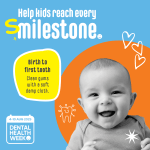
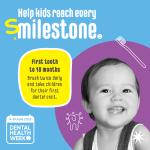
S-milestones -Dental Health week Kids

Dental Health Week is here!

This year, Dental Health Week shines a spotlight on the importance of children’s oral health milestones — and on educating parents and caregivers about how to support their children in reaching every “S-milestone.” See the video here. https://youtu.be/HxIRGci-tmg

Did You Know?

Even in Australia, tooth decay in children is alarmingly common:

  • 1 in 3 children aged 5–6 has decay in their baby teeth
  • 1 in 4 children aged 6–16 has decay in their adult teeth

For many of these children, this means a lifetime of ongoing dental treatment.

There is a common myth that tooth decay in baby teeth is not a big deal because they will eventually fall out. However, losing baby teeth too early can cause problems. It can lead to space loss with the adjacent teeth drifting into the empty space and later to complex orthodontic problems such as crowding.

What Causes Decay?

Tooth decay is mainly caused by sugars in our diet. These sugars feed the bacteria in our mouths, which produce acid as a by-product. Over time, that acid wears away the tooth surface, eventually causing “holes.”

That is why it is crucial to:

  • Eat healthy foods at regular intervals
  • Avoid frequent snacking
  • Clean teeth thoroughly every day

As parents and caregivers, we play a key role in helping kids make smart food choices and keeping their meal and snack times structured.

How to Protect Your Child’s Smile

The best way to care for children’s teeth is to:

  • Brush twice a day – morning and night
  • Use fluoride toothpaste from 18 months of age
  • Clean between the teeth daily (once the teeth start to touch)

Our team is here to support your family with regular check-ups and early detection of dental issues. Let’s work together to build strong, healthy smiles from the very start! You may be eligible for the Medicare Child Dental Benefit Scheme. We bulk bill patients who are eligible. Make an appointment today!

See you in the clinic!  The Victoria Park Dental Care team.

PS:  check out our socials (Facebook, LinkedIn, Instagram) for top tips for teeth, mouth and gums and dental family snaps!  Maybe even the latest video on YouTube. 
teeth do not repair themselves!

It is mouthguard time!  Footy is back, hockey is back, basketball/netball are ongoing. Winter sports time is here.  We remind all patients of the terrible impact a sporting injury can have on our teeth, jaw and soft tissues.  A knock to the mouth can result in losing teeth as well as significant long-term damage.  Teeth do not repair themselves. Most sports are now no mouthguard, no play; an initiative which we fully support.  Here at Victoria Park Dental Care, we make professional mouthguards for both junior and senior sport. 

Our mouthguards are custom-made here in Adelaide supporting another locally owned and run business, Adelaide Laboratories.  They are comfortable and firm fitting to ensure maximum protection for you or your child.  They come with a case to keep them clean going to and from sport.  (They should never go in your footy socks! Gross!).  Our mouthguards are coloured in the design of your choice and even have your name in them.  We love the choice Michelle made for her custom mouthguard. 😊 

Should you or your child knock a tooth out, we would recommend the following steps:

•          Find the tooth, be careful to only pick it up by the crown or shiny part of the tooth

•          If it is an adult tooth and fairly clean, put the tooth back where it came from (if you can)

•          Gently bite on a tissue to support the replaced tooth and get to the Dentist for assistance

•          If you are unable to put the tooth back in, store it in milk or saliva in a container and get to the Dentist immediately.

It is not only sport that can injure teeth or mouths.  Falls, accidents, crashes etc can also play a part.  A chipped or broken tooth may also need to be assessed quickly.  Call and advise the clinic you have a mouth trauma and we will assess the tooth and decide on the best course of treatment with you.  We are here to support you in any emergency situation.  Call the clinic on 8332 1188 and will we assist you.

May the floss be with you!  As an avid Star Wars fan, May the 4th is one of Michelle’s favourite days of the year.  Expect a Star Wars meme or two on our Facebook page!!

We had a couple of busy months during March and April.  We hope you had fun over Gather Round, Easter and the school holidays.  In clinic news everyone has updated their medical emergency training with CPR and learnt some new exercises from our ergonomics workshop with Thrive Physio Plus.  It is great that the CPR trainer does simulations in our clinic to make it real world. 

See you in the clinic!  The Victoria Park Dental Care team.

PS:  check out our socials (Facebook, LinkedIn, Instagram) for top tips for teeth, mouth and gums and dental family snaps!  Maybe even the latest video on YouTube. 

Chocolate – is it good for your teeth

Chocolate – Is it good for your teeth and health?  As much as we would love to say it is good for your teeth, especially at Easter, we have to say it isn’t! 

There are multiple variety of chocolate and chocolate products with varying degrees of sugar, hard additives such as nuts, extra had additives such as praline and sticky additives like toffee and nougat. 

Dark chocolate usually has less sugar and more cocoa solids, than milk or white chocolate but it varies depending on the brand.  Milk chocolate contains cocoa solids and more sugar, while white chocolate contains cocoa butter, sugar and milk and is generally the sweetest chocolate.  In a 100gm serving of chocolate you will find the following amount of sugar. 

🍫 Dark Chocolate (70–85% cocoa)10–30g of sugar
🍫 Milk Chocolate40–50g of sugar
🍫 White Chocolate50–60g of sugar

Sugars are food to the decay causing bacteria in your mouth which leads to an acidic environment next to the enamel (often in between the teeth), and then this causes the enamel to leak calcium and phosphates. If this calcium and phosphate are not replaced from the saliva then a hole will develop.  The ions will not be replaced if the acid environment persists through lack of cleaning on all surfaces of the tooth or if the saliva flow is low or not good quality.

On top of this is the sticky insides of some chocolates that tend to linger over surfaces of the teeth.  Thinking of toffees or nougat or cream fillings that make their way into the nooks and crannies of teeth. Sigh!  These often spend time on teeth creating a longer acidic environment that these bacteria love.  And then there is the hard or extra hard additives.  For all our patients, who have fillings or crowns these are the chocolates that will break teeth around fillings or porcelain!  Best treat these with care. Plus, a tip – please don’t put chocolate in the fridge and then try to bite into it.  It will break teeth!

“Everything in moderation” is a wonderful saying and we would love to follow that advice with chocolate of any kind.  The Haigh’s store is on Greenhill Road, Menz Fruchocs are available, Charlesworth Nuts are available too, and we do like to support South Australian business after all!  Dr Stone is a Haigh’s dark chocolate fan.  However, we do need to follow our scope of practice and remind all of the need for good oral hygiene regardless of your own chocolate preferences.  Flossing, interproximal brushes such as piksters, and brushing with a fluoride toothpaste will help strengthen your enamel, reducing the harm done by chocolate.  Regular dental and hygiene visits with regular dental xrays will also help us to fix something small or introduce a new oral care regime to assist you to keep your teeth as long as possible.

We wish you a wonderful Easter break with family and friends.

See you in the clinic!  The Victoria Park Dental Care team.

PS:  check out our socials (Facebook, LinkedIn, Instagram) for top tips for teeth, mouth and gums and dental family snaps!  Maybe even the latest video on YouTube.  Our last team training day on Medical Emergencies in Dental Practice will be up there.

Snoring or trouble with sleep apnoea?

At Victoria Park Dental Care, we believe in helping our patients achieve not only healthy smiles but also a better quality of life. Today, we are shining a spotlight on sleep apnoea, a condition that can disrupt your sleep and negatively impact your overall health.

What is Sleep Apnoea?

Sleep apnoea is a serious sleep disorder where your breathing repeatedly stops and starts throughout the night. The most common type is obstructive sleep apnoea (OSA), which occurs when the muscles in the back of your throat relax excessively during sleep, causing a temporary blockage in your airway. Current findings have also found that the tissues in the upper airway are also more likely to collapse with aging. 

Common symptoms of sleep apnoea can include:

  • Loud snoring
  • Gasping or choking during sleep
  • Excessive daytime sleepiness
  • Difficulty concentrating
  • Morning headaches
  • Feeling unrefreshed upon waking
  • Grinding teeth during sleep

If left untreated, OSA can lead to serious health issues, such as high blood pressure, heart disease, and stroke.

How to Address Sleep Apnoea

If you suspect you may have sleep apnoea, it is important to speak with your local GP. Consider bringing your bedroom partner along if they notice your sleep being noisy or disturbed. Your GP will refer you to a sleep clinic for a sleep study, where your oxygen levels and breathing patterns will be monitored overnight.

Treatment Options for Obstructive Sleep Apnoea

There are two main treatments for managing sleep apnoea:

  1. CPAP (Continuous Positive Airway Pressure) – This is the most common treatment for moderate to severe sleep apnoea. A CPAP machine uses a mask that delivers a continuous flow of air to keep your airway open as you sleep.
  2. Mandibular Advancement Splints – For mild to moderate sleep apnoea or for those who cannot tolerate a CPAP machine, a bimaxillary advancement splint is an effective alternative. This custom-fitted device helps reposition the lower jaw slightly forward, which keeps the airway open and prevents it from collapsing during sleep. They are also a great option for those who travel a lot.

At our sister practice of Adelaide City Dental Care, we offer a range of Somnomed devices as part of our commitment to providing high-quality solutions for sleep apnoea. Somnomed is a leader in the development of mandibular advancement splints, offering a comfortable, non-invasive way to manage sleep apnoea without the need for bulky equipment like CPAP machines. We can custom-fit a Somnomed device to your unique mouth and jaw structure, ensuring it is comfortable and effective.

Schedule a Consultation Today! If you think you may be suffering from sleep apnoea, snoring, or related symptoms, we encourage you to schedule a consultation with our team at Adelaide City Dental Care. We will help you explore the best treatment options, including the Somnomed device, to improve your sleep quality and overall health.

See you in the clinic!  The Victoria Park Dental Care team.

PS:  check out our socials (Facebook, LinkedIn, Instagram) for top tips for teeth, mouth and gums and dental family snaps!  Maybe even the latest video on YouTube.